The kernel stack, assembled
FlashMLA, DeepGEMM, DeepEP, TileKernels, DeepSelect, and custom TileLang kernels are wired into one engine. DeepSeek had released the pieces before; this release wires them into one engine.
DeepInfer is DeepSeek's open-source inference framework for serving DeepSeek-V4.1-Flash at scale. Released on 20 October 2026 under the Apache-2.0 license, it provides an offline inference engine for NVIDIA SM100 GPUs and Huawei Ascend 950 NPUs — but not the KV cache system, prefill/decode disaggregation, or load balancing needed for a complete online service.
A production-derived inference engine: optimized kernels, expert parallelism, speculative decoding, sliding-window cache recovery, asynchronous scheduling, and deterministic modes. DeepSeek also released deepseek-recipe, a companion library for API protocol conversion and tokenization.
It is a rare look at how DeepSeek actually serves a frontier open-weight model: Wide-EP at decode, confidence-scheduled speculation, and a cache policy that trades exactness for bounded recompute. The ideas are useful even if you never run the code.
FlashMLA, DeepGEMM, DeepEP, TileKernels, DeepSelect, and custom TileLang kernels are wired into one engine. DeepSeek had released the pieces before; this release wires them into one engine.
Attention uses data parallelism; the MoE part uses expert parallelism. In DeepSeek's production design, decode spreads experts across 64–128 GPUs and rebalances hot experts with redundant copies.
Draft tokens are proposed ahead; a confidence head predicts which ones are worth verifying. DeepSeek reports +4–7% throughput at its production operating point.
Instead of rebuilding the full sliding-window cache across every layer, the engine replays only the recent tail. The result is approximate; the recompute cost becomes bounded.
The CPU prepares the next batch while the GPU runs the current one. The goal is to remove the idle gap between decode steps — an engineering detail with real throughput value.
Batch-invariant inference and deterministic sampling are available on NVIDIA. They are the unglamorous features that make benchmarks and agent runs auditable.
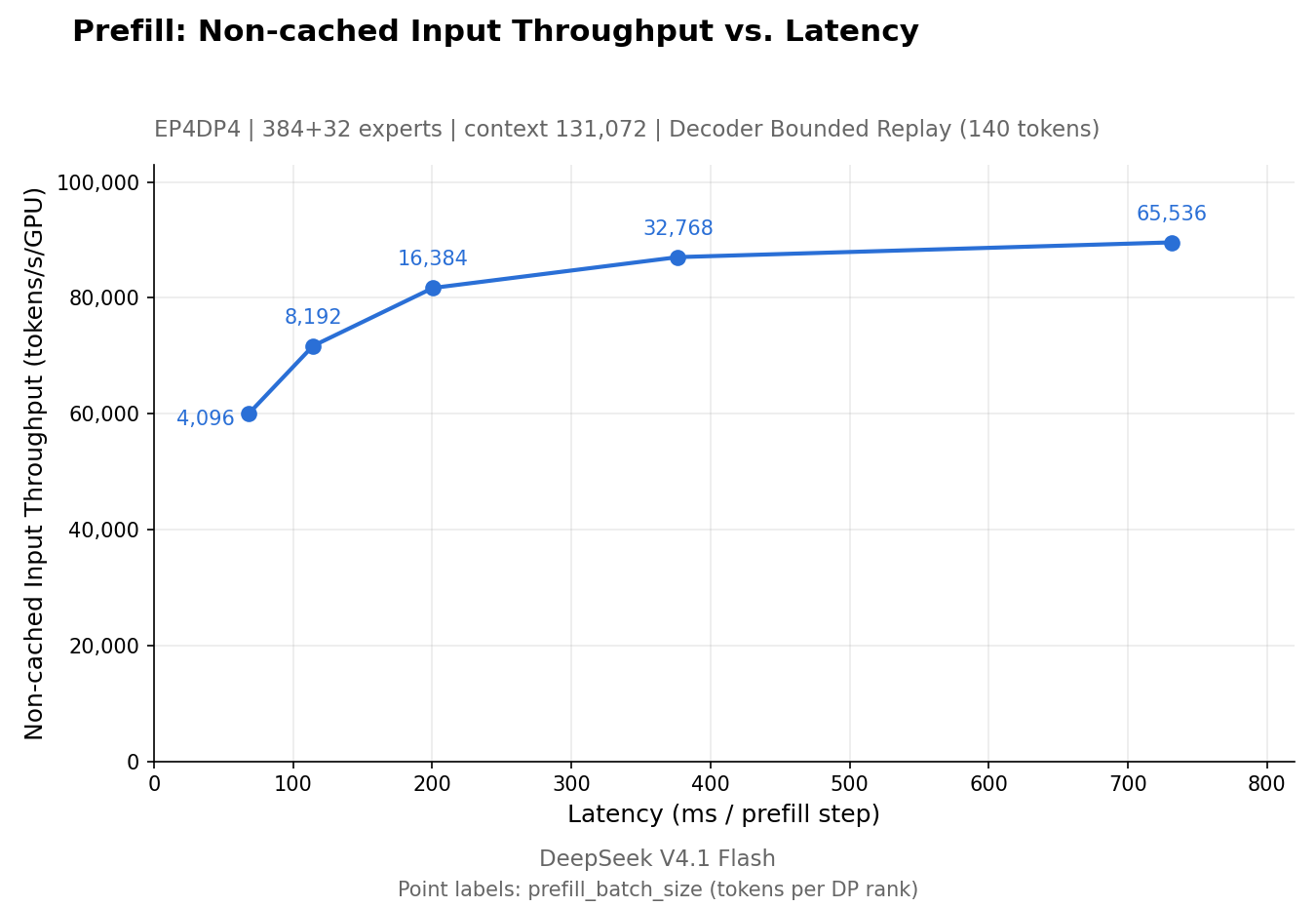
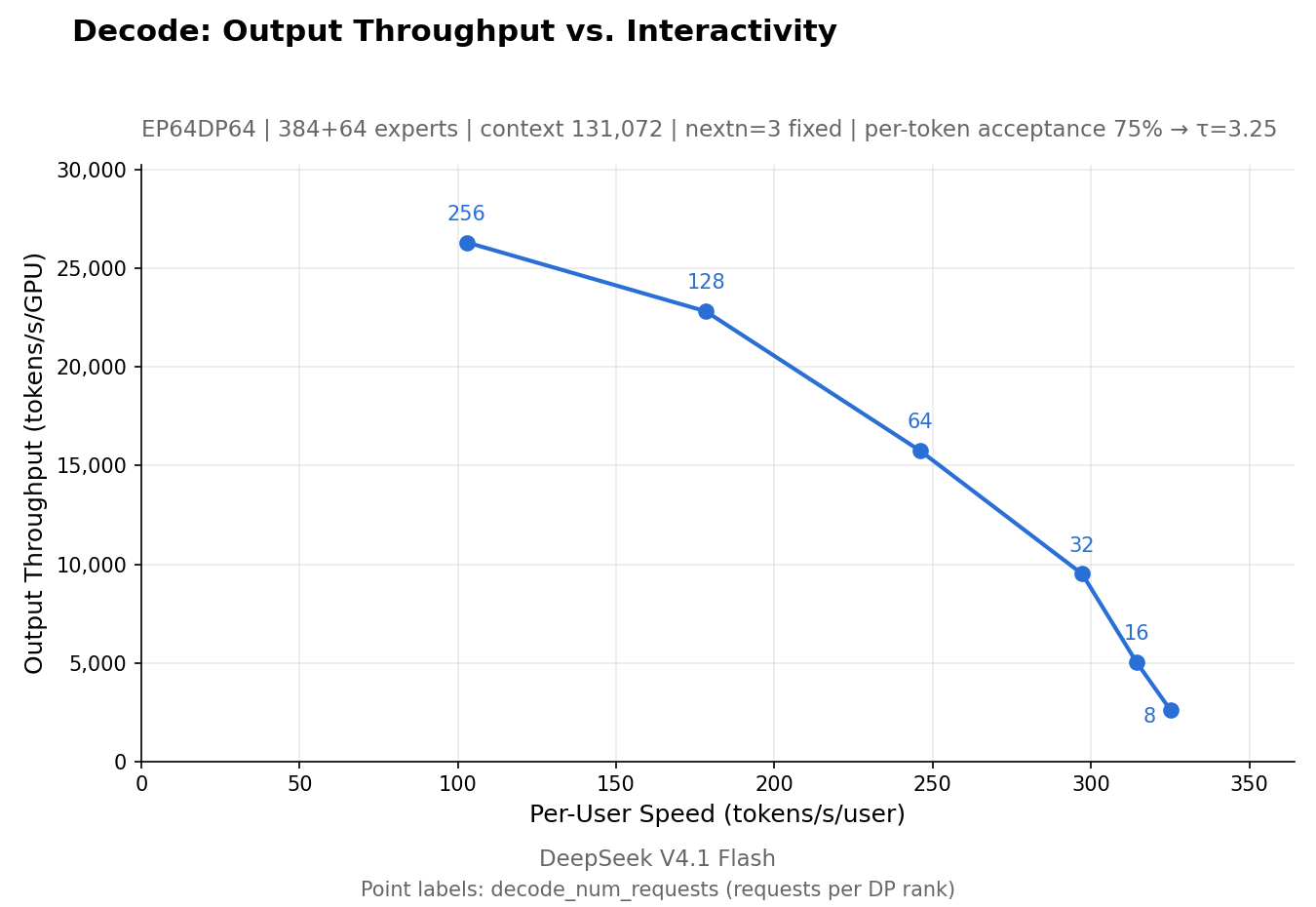
DeepInfer is an engine, not a service. The README is unusually direct about the difference: a complete inference service also needs a KV cache system, prefill/decode disaggregation, and load balancing across data-parallel replicas. None of the three is in the release.
The gap is not a scandal. It is a design boundary: DeepSeek kept the parts most tightly coupled to its internal infrastructure. But it changes who can use the code and what they can expect from it.
The name DeepInfer also refers to an unrelated 2016 medical-imaging toolkit and an unrelated 2023 smart-contract type-inference project; this site covers only DeepSeek's 2026 inference framework. Full disambiguation →
DeepSeek says a full inference-engine release is impractical: the code diverged from vLLM, is coupled to internal infrastructure, and the team lacks maintenance bandwidth.
Ascend groundwork: DeepGEMM-Ascend, DeepEP-Ascend, and Ascend backends for the kernel stack. No DeepInfer yet.
The deepseek-ai/DeepInfer repository is created.
Official X thread and public repository. The code lands with three public commits.
Snapshot: about 5.4k stars, 408 forks, 47 open items. A 120-comment Hacker News thread is already running.
A recurring technical objection was not about speed. It was about the missing KV cache. Within hours, contributors also opened RFCs for SM90/H20 and Ascend 910C support — demand beyond the official hardware list, not shipped support.
We did not run DeepInfer. We do not have SM100 or Ascend 950 hardware. Every number on this site is attributed to a public source, and every claim we could not verify is labeled as such.
Scope, build requirements, licenses, and the repository map.
/release/ →Wide-EP, DSpark, SWA replay, async scheduling, and Recipe.
/architecture/ →The two charts, the eval numbers, and what they don't prove.
/benchmarks/ →Who can run it, what's missing, and what you'd have to build.
/limits/ →DeepSeek vs medical vs smart contracts vs DeepInfra.
/name/ →Sixteen questions, each answered with its source.
/faq/ →